
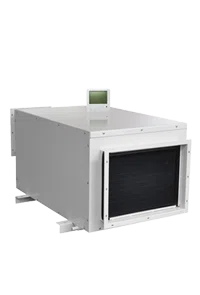
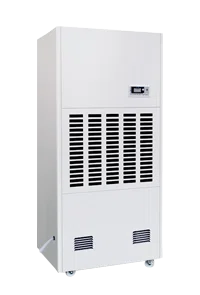
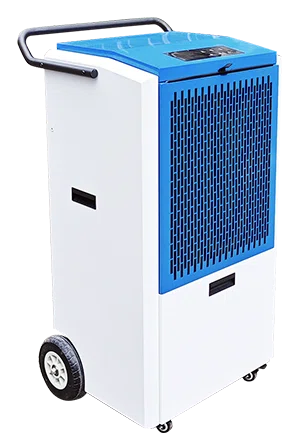
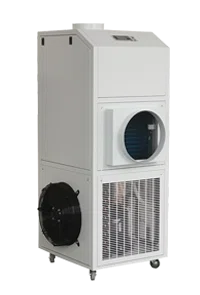
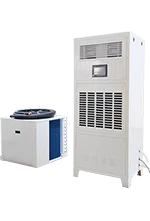
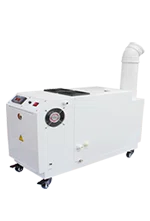
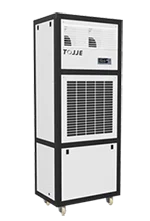
Attemperation Dehumidifiers for Efficient Industrial Climate Control
Maintaining stable temperature and humidity conditions is essential for many industrial environments. Excess moisture can affect raw materials, production processes, equipment performance, and final product quality. Attemperation dehumidifiers combine dehumidification with controlled air conditioning to help industrial facilities maintain a more consistent indoor climate.
How Attemperation Dehumidifiers Improve Industrial Climate Control
1. Precise Humidity Regulation
Attemperation dehumidifiers can continuously remove excess moisture from the air, helping maintain a target relative humidity range. This is particularly valuable in manufacturing and storage areas where moisture levels directly affect product quality.
2. Controlled Air Temperature
Humidity reduction can sometimes produce unwanted changes in air temperature. Attemperation technology helps manage the temperature of treated air, providing a more balanced climate-control process.
3. Protection of Moisture-Sensitive Materials
Many industrial materials are sensitive to atmospheric moisture. Maintaining suitable humidity conditions can reduce moisture absorption and help preserve the physical and chemical properties of products during processing and storage.
4. Improved Equipment Reliability
Stable environmental conditions can help reduce condensation and moisture-related problems around machinery, electrical systems, sensors, and other industrial equipment. This may support more reliable operation and reduce maintenance requirements.
5. Better Process Stability
Some manufacturing processes require consistent environmental conditions to achieve repeatable results. Attemperation dehumidifiers can help minimize fluctuations in humidity and temperature, supporting greater process consistency.
Applications of Attemperation Dehumidifiers
Attemperation dehumidification systems can be used in a variety of industrial environments, including:
-
Electronics manufacturing: Protecting sensitive electronic components from moisture-related damage.
-
Pharmaceutical production: Supporting controlled environmental conditions for manufacturing and storage.
-
Food processing: Managing humidity to help maintain appropriate production and storage environments.
-
Chemical manufacturing: Controlling moisture where humidity can influence material properties or processes.
-
Warehouses: Protecting moisture-sensitive products during long-term storage.
-
Battery manufacturing: Helping maintain controlled environmental conditions for moisture-sensitive production processes.
-
Precision manufacturing: Supporting stable conditions for processes requiring tight environmental tolerances.
Key Factors When Selecting an Attemperation Dehumidifier
When choosing an industrial system, several factors should be evaluated:
Moisture Removal Capacity
The dehumidifier should have sufficient capacity for the facility's moisture load, including infiltration, production processes, and material moisture.
Temperature Control Range
Consider the required supply-air and room-temperature conditions. The system should provide suitable temperature regulation for the application.
Airflow Capacity
Adequate airflow is essential for distributing conditioned air effectively throughout the target space.
Energy Efficiency
Industrial dehumidification can consume significant energy. Efficient compressors, heat-exchange components, controls, and operating strategies can help reduce energy consumption.
Control and Monitoring
Modern systems may incorporate sensors and automatic controls for monitoring temperature and relative humidity. Automated control can help maintain stable environmental conditions while reducing manual intervention.
How to Improve Attemperation Dehumidifier Efficiency
Proper system sizing is one of the most important factors in efficient operation. Oversized or undersized equipment can result in unnecessary energy consumption or inadequate moisture control.
Facilities can also improve efficiency by:
-
Reducing unnecessary air infiltration.
-
Maintaining doors and seals properly.
-
Cleaning filters and heat-transfer components regularly.
-
Calibrating humidity and temperature sensors.
-
Monitoring operating conditions continuously.
-
Adjusting system output according to actual production requirements.
-
Scheduling preventive maintenance.
Attemperation dehumidifiers provide an integrated solution for industrial temperature and humidity management. By combining effective moisture removal with controlled air-temperature regulation, they can help protect materials, improve equipment reliability, stabilize production processes, and create more consistent industrial environments.
For facilities where both humidity and temperature must be carefully controlled, selecting a properly sized and efficiently operated attemperation dehumidifier can be an important step toward reliable industrial climate control.