
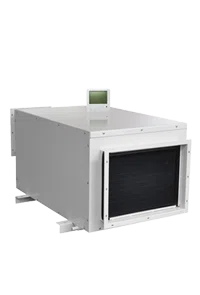
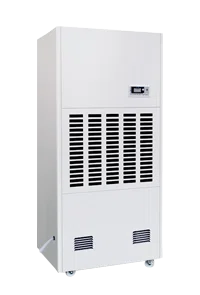
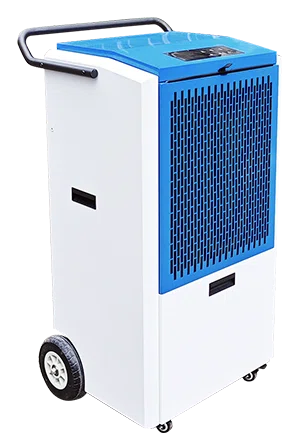
Ducted Dehumidifiers in Schools: Ducted Systems and Ventilation Loads
Maintaining healthy indoor air quality in schools requires more than controlling temperature. Classrooms, libraries, laboratories, gymnasiums, cafeterias, and indoor swimming facilities all experience changing moisture loads throughout the school day. High humidity can contribute to condensation, musty odors, mold growth, and discomfort, while excessive moisture can also affect building materials, teaching equipment, and stored supplies.
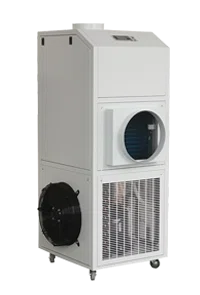
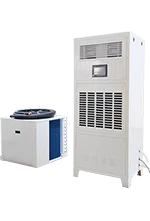
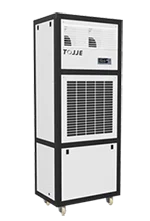
Ducted dehumidifiers provide a practical solution for managing humidity across larger or multiple indoor spaces. By integrating moisture removal with a building's ductwork, these systems can deliver conditioned, dehumidified air to designated areas while keeping the equipment outside occupied rooms.
Why Humidity Control Matters in Schools
School buildings experience substantial variations in moisture throughout the day. Students and staff release moisture through respiration, while activities such as cooking, showering, laboratory work, and indoor sports can introduce additional water vapor.
Outdoor air entering through ventilation systems can also carry significant moisture, particularly in warm and humid climates.
When indoor humidity remains too high, several problems may arise.
Mold and Moisture Damage
Persistent dampness can create conditions that support mold growth on walls, ceilings, insulation, carpets, and other building materials. Condensation around windows, cold surfaces, and poorly insulated ducts may further increase moisture-related risks.
Humidity control helps reduce excess airborne moisture, but it cannot replace the repair of leaks, removal of standing water, or remediation of existing mold.
Indoor Comfort and Concentration
High humidity can make classrooms feel warmer and less comfortable, especially during hot weather. Students and teachers may experience a stuffy environment when moisture control and ventilation are inadequate.
A properly designed HVAC system should manage temperature, humidity, and ventilation together rather than relying on one parameter alone.
Protection of School Equipment and Materials
Libraries, computer rooms, laboratories, music rooms, and storage areas may contain books, electronics, instruments, and other materials that are sensitive to prolonged moisture exposure.
Appropriate humidity management can help protect these assets, provided the target conditions are matched to the specific room and its contents.
Energy Efficiency
Excessive moisture can increase cooling demand because air-conditioning equipment may need to remove both sensible heat and latent heat.
A dedicated ducted dehumidifier can help manage latent loads when the existing HVAC system cannot maintain the required humidity conditions on its own. Whether it reduces total energy consumption depends on equipment efficiency, controls, ventilation strategy, and system integration.
Smart Controls and Building Management Integration
Modern ducted dehumidifiers can use humidity sensors, programmable controls, and BMS integration to coordinate operation with occupancy and ventilation schedules.
Humidity-Based Operation
Sensors measure indoor relative humidity and signal the equipment when moisture removal is required.
Accurate sensor placement is essential. Sensors located near supply outlets, exterior doors, or localized moisture sources may not represent the conditions experienced by occupants throughout the room.
Occupancy and Scheduling
School buildings often have predictable daily and seasonal occupancy patterns. Controls can use schedules to adjust operation before classrooms fill, during occupied periods, and after school hours.
However, humidity control should not be disabled automatically whenever a building is unoccupied. Moisture can continue entering through ventilation, infiltration, wet materials, or other sources.
BMS Monitoring
Integrating the dehumidifier with a BMS can help facility teams monitor humidity, equipment status, alarms, and energy use.
Depending on the system, monitoring may also include supply-air temperature, condensate alarms, filter status, and operating hours.
These features can help identify problems early and support maintenance planning.
Demand-Responsive Control
Humidity sensors and suitable control logic can reduce unnecessary operation when moisture levels are already within the intended range.
Effective control should account for both humidity and temperature, while preserving required ventilation rates and avoiding rapid cycling or excessive fluctuations.
Energy Efficiency: Managing Moisture Without Wasting Power
Dehumidification consumes energy, so system efficiency should be evaluated alongside moisture-removal performance.
Select Equipment for Actual Operating Conditions
Nominal capacity alone does not show how much electricity a system uses to remove a given quantity of water.
Compare equipment using performance data at representative operating conditions, including moisture-removal rate, electrical input, airflow, and any relevant energy-efficiency metrics.
Coordinate Dehumidification and Cooling
Refrigerant-based dehumidifiers cool air to condense moisture and may then warm the treated air as part of the process. Depending on the design, this can affect the school's cooling and heating loads.
When the system is poorly integrated, it may remove moisture effectively but introduce additional sensible heat that the air-conditioning system must remove.
Appropriate equipment selection, control sequences, and heat recovery options can help manage this interaction.
Reduce Unnecessary Moisture Entry
Repairing roof leaks, improving drainage, sealing unintended air leaks, and managing wet areas can reduce the building's moisture burden.
Reducing unnecessary moisture entry often improves the performance of the entire HVAC system rather than relying exclusively on additional dehumidification capacity.
Maintain Filters and Coils
Dirty filters and fouled coils can restrict airflow and impair heat transfer. Regular maintenance helps preserve performance and can reduce avoidable energy consumption.
Ducted dehumidifiers can play an important role in maintaining suitable indoor humidity in schools, particularly where ventilation introduces significant moisture or existing HVAC equipment cannot adequately manage latent loads.
For school administrators, facility managers, and HVAC contractors, understanding the relationship between ducted dehumidification and ventilation loads is essential to creating comfortable, durable, and energy-conscious educational environments.