
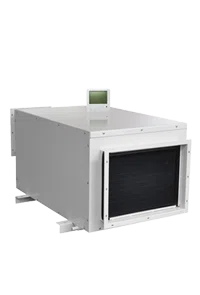
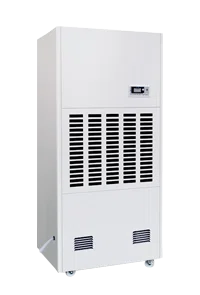
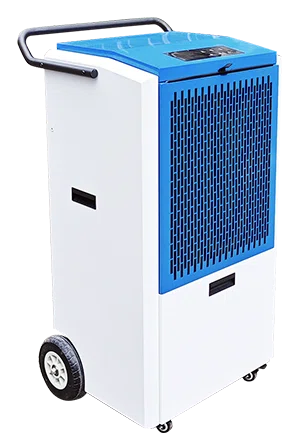
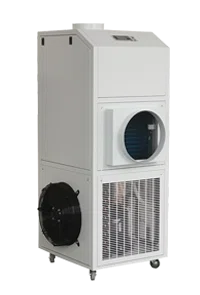
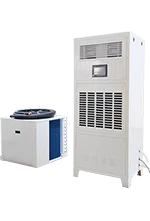
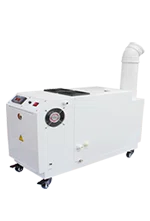
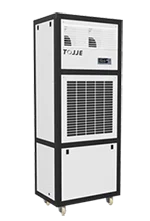
Greenhouse Dehumidifiers With Your Climate Computer
Maintaining the right humidity level is one of the biggest challenges in greenhouse climate management. Excess moisture can encourage condensation, create conditions for plant diseases, and interfere with the consistency of the growing environment.
A greenhouse dehumidifier can help remove excess moisture from the air, but its effectiveness can be improved when it works together with a greenhouse climate computer.
Instead of operating the dehumidifier as an isolated piece of equipment, growers can integrate humidity control into a broader climate management strategy.
Combining Dehumidification With Ventilation
Ventilation is one of the most common methods of controlling greenhouse humidity. However, opening vents is not always the ideal solution.
During cold or humid outdoor conditions, ventilation can introduce new moisture or cause unwanted heat loss. In these situations, mechanical dehumidification can provide another option.
A climate computer can coordinate ventilation and dehumidification based on indoor and outdoor conditions.
For example, the system may determine whether it is more appropriate to:
-
Increase ventilation.
-
Activate the greenhouse dehumidifier.
-
Use both methods.
-
Maintain the current settings.
This coordinated approach allows humidity management to become part of the overall climate strategy rather than a separate manual task.
Better Control During the Night
Nighttime can present a particular humidity challenge for greenhouse growers.
As temperatures decrease, the air holds less moisture. At the same time, plants continue to release water vapor through transpiration.
If ventilation is reduced to conserve heat, relative humidity can increase.
A greenhouse dehumidifier can provide moisture removal without requiring large amounts of cold outdoor air to enter the greenhouse.
When connected to a climate computer, the system can respond to nighttime humidity changes automatically according to the grower's settings.
Reducing Condensation Risks
Condensation is closely related to temperature and humidity.
When greenhouse surfaces become sufficiently cold, moisture from the air can condense on those surfaces. This may occur on leaves, glazing, structural components, or equipment.
A climate computer can monitor temperature and humidity data to identify conditions associated with condensation risk.
The greenhouse dehumidifier can then be used as part of a broader strategy to maintain a more suitable moisture level.
This does not eliminate every condensation risk, but it provides growers with another tool for managing the greenhouse environment.
Potential Energy Efficiency Benefits
Energy consumption is an important consideration when using mechanical dehumidification.
Running a dehumidifier continuously may provide more moisture removal than necessary and increase energy consumption.
Climate-based control can help match dehumidification operation with actual environmental requirements.
Instead of simply asking, “Is the dehumidifier on or off?”, a climate computer can support more intelligent decisions about when moisture removal is required and how it should interact with other climate-control equipment.
The actual energy savings will depend on greenhouse design, local climate, equipment efficiency, crop requirements, and control settings.
Data Makes Humidity Management Easier to Analyze
Another advantage of connecting a greenhouse dehumidifier to a climate computer is access to historical environmental data.
Growers can review humidity trends over time and compare them with temperature, ventilation, irrigation, and dehumidifier operation.
This information can help answer practical questions such as:
-
When does greenhouse humidity typically peak?
-
Does humidity rise after irrigation?
-
Are nighttime humidity levels consistently high?
-
How frequently does the dehumidifier operate?
-
Is ventilation providing sufficient moisture control?
-
Are certain growing areas more humid than others?
With this information, growers can gradually refine their climate-control strategy.
Greenhouse dehumidifiers and climate computers can work together to create a more responsive humidity-control strategy.
The dehumidifier provides the physical moisture-removal capability, while the climate computer uses sensor data to determine when dehumidification should be integrated into the overall greenhouse climate-control process.
By combining humidity monitoring, ventilation, temperature management, and automated control, growers can better manage moisture conditions while potentially improving operational efficiency.