
Humidity Control for Pharmaceutical and Nutraceutical with Warehouses Dehumidifier
Pharmaceutical and nutraceutical products require carefully controlled storage conditions to maintain their quality, stability, and shelf life. While temperature is often the first environmental factor considered in warehouse management, humidity control is equally important. Excess moisture can affect powders, tablets, capsules, packaging materials, labels, and other moisture-sensitive products.
Using a properly selected warehouse dehumidifier can help pharmaceutical and nutraceutical facilities maintain a stable indoor environment and reduce moisture-related storage risks.
How Warehouse Dehumidifiers Support Moisture Control
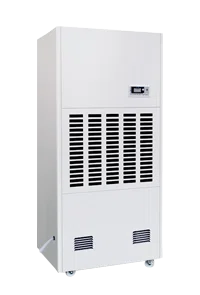
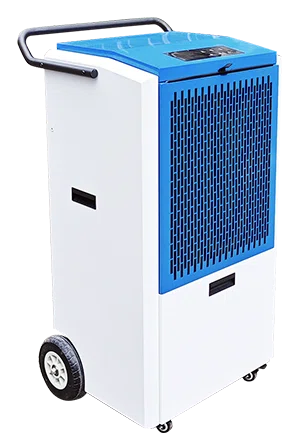
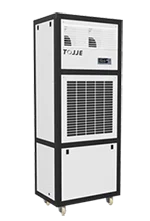
A warehouse dehumidifier works by removing water vapor from the air before excessive moisture can affect stored products.
Depending on the facility and target humidity level, different dehumidification technologies may be considered.
Refrigerated Dehumidifiers
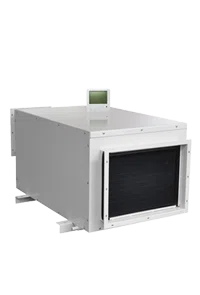
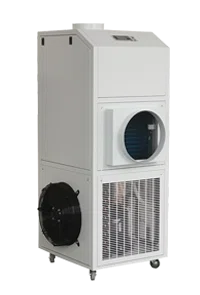
Refrigerated dehumidifiers cool humid air below its dew point so that water vapor condenses and can be removed.
They are commonly suitable for warehouses dehumidifier where moderate humidity control is required and indoor temperatures remain within an appropriate operating range.
Desiccant Dehumidifiers
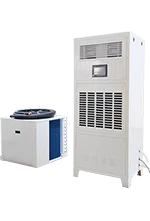
Desiccant systems use moisture-adsorbing materials to remove water vapor from the air. They can be useful when facilities require lower humidity levels or need effective moisture control under lower-temperature conditions.
For pharmaceutical and nutraceutical warehouses dehumidifier handling highly moisture-sensitive products, desiccant dehumidification can provide an additional approach to maintaining a dry environment.
Preventing Condensation in Pharmaceutical Warehouses Dehumidifier
Condensation is another important concern in pharmaceutical storage areas.
When warm, humid air contacts a cold surface, water vapor can condense. This may occur around:
-
Cold storage areas
-
Metal racks
-
Pipes and ducts
-
Doors and loading areas
-
Refrigeration equipment
-
Building surfaces
A warehouse dehumidifier can reduce the amount of moisture available for condensation. Combined with appropriate insulation, ventilation, and temperature management, dehumidification can help maintain a more stable warehouse environment.
Protecting Packaging and Labels
Humidity does not only affect pharmaceutical and nutraceutical products themselves. Packaging components can also be sensitive to moisture.
High humidity may affect cartons, paper labels, adhesive materials, and other packaging components. Changes in packaging condition can create handling and storage problems.
By maintaining controlled relative humidity, an industrial dehumidification system can help protect both products and their packaging throughout the storage process.
Dehumidification for Receiving and Dispatch Areas
Warehouse humidity control should not necessarily be limited to storage zones.
Receiving and dispatch areas can experience significant moisture fluctuations because of frequent door opening, outdoor air infiltration, and the movement of goods between different environments.
Installing appropriate dehumidification capacity in these areas can help reduce sudden increases in indoor humidity and minimize the impact of humid outdoor air entering the facility.
Combining Dehumidification with Warehouse Monitoring
Modern pharmaceutical and nutraceutical warehouses dehumidifier can combine dehumidifiers with environmental monitoring systems.
Sensors can continuously monitor:
-
Relative humidity
-
Temperature
-
Dew point
-
Warehouse zones
-
Equipment operating conditions
When humidity rises above a predefined target, the dehumidification system can respond automatically. This approach provides more consistent environmental management than relying on occasional manual measurements.
Improving Warehouse Energy Efficiency
Humidity control does not have to mean excessive energy consumption. Proper system sizing and warehouse management can improve efficiency.
Practical measures include:
-
Sealing unnecessary air leakage
-
Keeping warehouse doors closed when possible
-
Using air curtains in high-traffic areas
-
Insulating cold surfaces and pipes
-
Installing humidity sensors in representative locations
-
Matching dehumidifier capacity to actual moisture loads
-
Using automatic humidity control
-
Maintaining filters and heat-transfer components regularly
These measures can reduce unnecessary operation while maintaining the desired environmental conditions.
For pharmaceutical and nutraceutical warehouses dehumidifier, humidity control should be considered part of an overall environmental management strategy. A suitable industrial dehumidifier can help control excess moisture, reduce condensation risks, protect moisture-sensitive products, and support stable storage conditions.
Rather than selecting equipment based only on warehouse floor area, facilities should consider moisture load, target relative humidity, temperature, air infiltration, product sensitivity, and operating requirements.
With appropriate equipment and continuous environmental monitoring, pharmaceutical and nutraceutical warehouses dehumidifier can create a more controlled storage environment and better protect valuable moisture-sensitive products.