
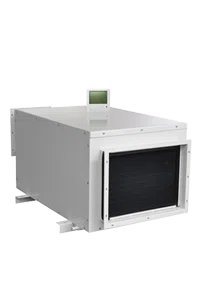
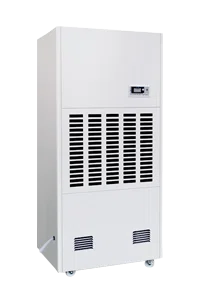
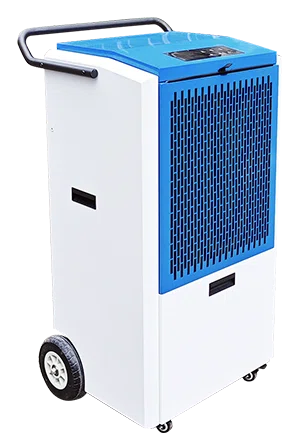
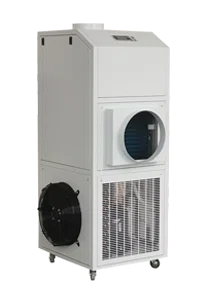
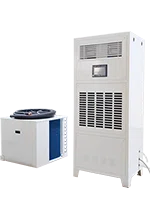
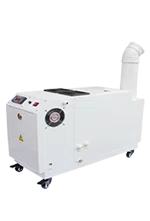
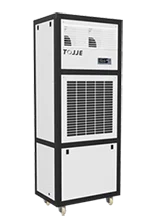
Letting the Greenhouse Dehumidifier Talk to Vents and Heaters
A greenhouse is a carefully controlled growing environment where temperature, humidity, and airflow all influence plant health. While growers often focus on heating and ventilation, humidity management deserves equal attention. Excess moisture can lead to condensation, encourage fungal diseases, and create an uncomfortable environment for crops.
By connecting dehumidifiers, ventilation equipment, and heating systems through a centralized controller, growers can create a smarter and more efficient environment. Instead of allowing individual devices to work against each other, an integrated system coordinates their operation according to actual greenhouse conditions.
How a Greenhouse Dehumidifier Works with Ventilation Systems
Ventilation is one of the most common methods of controlling greenhouse temperature and humidity.
Roof vents, side vents, and exhaust fans allow indoor air to exchange with outdoor air. When outdoor air contains less moisture than greenhouse air, ventilation can help remove excess water vapor.
However, opening vents is not always the right solution.
During cold weather, excessive ventilation can cause significant heat loss. In humid outdoor conditions, bringing outside air into the greenhouse may even increase the indoor moisture load.
This is why a greenhouse dehumidifier should communicate with the ventilation system rather than operate independently.
Making Ventilation Decisions Based on Humidity Conditions
An integrated climate control system can use indoor and outdoor temperature and humidity sensors to determine whether ventilation is beneficial.
For example:
-
Indoor sensors detect that greenhouse humidity has exceeded the target level.
-
The controller checks outdoor temperature and humidity conditions.
-
If outdoor air is suitable for removing moisture, the controller opens the vents or activates exhaust fans.
-
If outdoor air is too humid or too cold, the controller limits ventilation and activates mechanical dehumidification instead.
-
Once humidity returns to the desired range, the controller adjusts equipment operation.
This approach helps prevent unnecessary ventilation and reduces the possibility of losing valuable heat.
For more accurate moisture management, the controller can compare absolute humidity or humidity ratio rather than relying exclusively on relative humidity.
This distinction matters because cold outdoor air can have high relative humidity while still containing less actual water vapor than warm greenhouse air.
Why Greenhouse Dehumidifiers Should Communicate with Heaters
Heating and dehumidification are closely connected, especially during nighttime operation and winter growing seasons.
When greenhouse temperature decreases, relative humidity generally increases if the amount of water vapor remains unchanged.
Heating raises air temperature and can lower relative humidity. It can also help keep plant surfaces above the dew point, reducing the risk of condensation.
However, heating does not remove moisture from the greenhouse. It changes the relationship between air temperature and relative humidity.
This is why combining heating with mechanical dehumidification can be more effective.
Coordinating Heating and Moisture Removal
An integrated greenhouse climate control system can coordinate these two functions according to actual environmental conditions.
For instance:
-
When the greenhouse temperature drops below the desired level, the heater activates.
-
When humidity remains too high, the dehumidifier starts removing excess moisture.
-
When both temperature and humidity reach their target ranges, the controller reduces unnecessary equipment operation.
In some greenhouses, growers also use a heat-and-vent strategy. The greenhouse is heated before ventilation removes moisture-laden air.
Although this method can be effective under certain conditions, it may waste substantial energy because heated air is discharged outside.
Mechanical dehumidification can be a more energy-efficient alternative in many situations, depending on equipment performance, outdoor conditions, and energy costs.
The Importance of Dew Point Monitoring
A smart greenhouse should monitor more than temperature and relative humidity.
Dew point provides useful information about when condensation may occur.
If the temperature of a plant leaf or greenhouse surface falls below the surrounding air's dew point, moisture may condense on that surface.
By monitoring dew point, the controller can coordinate heating and dehumidification before condensation becomes a problem.
This is particularly valuable for greenhouses growing moisture-sensitive crops.
The Business Benefits of Integrated Greenhouse Climate Control
Connecting a greenhouse dehumidifier with vents and heaters is not just a technical upgrade. It can also improve daily greenhouse management and long-term operating efficiency.
More Consistent Humidity Management
Independent devices may respond to different sensor readings and operate without considering what other equipment is doing.
An integrated controller evaluates the entire greenhouse environment and selects an appropriate moisture-removal strategy.
This helps maintain more stable humidity conditions and reduce condensation risks.
Lower Unnecessary Energy Consumption
Heating, ventilation, and dehumidification all consume energy.
If these systems operate without coordination, they may work against each other. For example, a ventilation system may release warm indoor air while the heater continues consuming energy to maintain temperature.
Coordinated operation can reduce such conflicts and help growers use energy more efficiently.
Less Manual Adjustment
Without automation, greenhouse operators may need to monitor multiple control panels and adjust different devices throughout the day.
An integrated system automates many routine operations based on predefined environmental targets.
This reduces manual intervention and makes climate management more convenient.
Better Growing Conditions
Different crops have different temperature and humidity requirements.
A coordinated control system makes it easier to maintain crop-specific environmental conditions and respond to changing weather patterns.
While climate control alone cannot guarantee higher yields, it can help create a more stable environment for healthy plant development.
Improved Operational Reliability
Centralized monitoring allows operators to identify unusual temperature or humidity conditions and receive equipment alarms.
This makes it easier to detect problems such as sensor failures, drainage issues, or equipment malfunctions before they seriously affect greenhouse operations.
Practical Considerations Before Connecting Your Equipment
Although integrated greenhouse climate control offers many advantages, successful implementation depends on proper system design.
Sensor Placement Matters
Temperature and humidity sensors should be installed in representative growing areas.
Avoid placing sensors too close to:
-
Heating outlets.
-
Dehumidifier air outlets.
-
Ventilation openings.
-
Direct sunlight.
-
Irrigation spray zones.
For larger greenhouses, multiple sensors may be needed to monitor different growing zones and identify variations in environmental conditions.
Check Communication Compatibility
Not every greenhouse dehumidifier supports every communication protocol.
Before purchasing equipment, check whether the unit offers external control terminals, remote start/stop functions, alarm outputs, or communication interfaces.
If the existing greenhouse controller uses Modbus, for example, confirm that the dehumidifier supports the required Modbus interface and register configuration.
Additional gateways or control modules may be necessary when different devices use incompatible communication methods.
Select the Right Dehumidification Capacity
Choosing a greenhouse dehumidifier based only on greenhouse floor area can lead to poor performance.
The actual moisture load depends on several factors, including:
-
Greenhouse volume and construction.
-
Crop type and plant density.
-
Irrigation frequency.
-
Evaporation and transpiration rates.
-
Ventilation rate.
-
Indoor and outdoor climate conditions.
A properly sized unit should be selected according to the expected moisture-removal requirement and the manufacturer's rated operating conditions.
Define Equipment Operating Priorities
A coordinated system needs clear operating logic.
For example, when outdoor air is unsuitable for moisture removal, the controller should avoid opening vents simply because indoor relative humidity is high.
Similarly, heating and ventilation should be coordinated to prevent unnecessary heat loss.
Consider Maintenance and Long-Term Reliability
Regular maintenance is essential for stable operation.
Growers should inspect air filters, fans, drainage pipes, sensors, electrical connections, and communication interfaces.
A well-maintained system is more likely to provide accurate environmental monitoring and reliable automatic control.
Letting a greenhouse dehumidifier communicate with vents and heaters creates a smarter and more coordinated approach to greenhouse climate management.
Ventilation helps exchange indoor and outdoor air, heating maintains suitable temperatures, and dehumidification actively removes excess moisture. When these systems work together, growers can manage humidity more effectively, reduce conflicting equipment operations, and improve overall climate stability.