
Pairing Desiccant Dehumidifier with Cooling Coils for Efficiency
Maintaining stable temperature and humidity is essential in many industrial, commercial, and specialized environments. Cooling coils are commonly used to reduce air temperature and remove moisture through condensation, while desiccant dehumidifiers use moisture-adsorbing materials to achieve lower humidity levels.
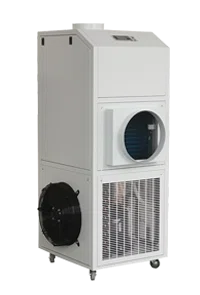
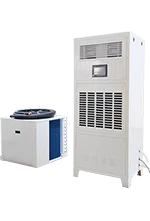
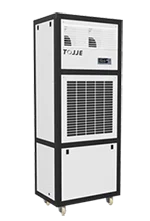
Rather than relying on either technology alone, combining a desiccant dehumidifier with cooling coils can provide a flexible approach to humidity and temperature control. Each system handles a different part of the air-treatment process, which can help improve performance in applications requiring precise environmental conditions.
Improving Low-Humidity Performance
Cooling coils have practical limits when extremely dry air is required.
To achieve very low dew points using cooling alone, the coil temperature would need to be reduced significantly. This can increase the risk of coil frosting and may require additional refrigeration capacity.
Desiccant technology can continue removing moisture without depending on condensation at extremely low temperatures.
Therefore, combining both systems can provide a practical pathway from conventional cooling-based dehumidification to deeper drying.
Energy Efficiency Considerations
Energy efficiency depends heavily on how the two technologies are integrated.
A poorly designed system can consume unnecessary energy because both systems may work harder than necessary. A properly designed system, however, can assign different moisture-removal duties to each stage.
Potential efficiency improvements may come from:
-
Pre-cooling humid air
-
Reducing the moisture load on the desiccant
-
Optimizing regeneration temperature
-
Recovering heat where practical
-
Controlling airflow according to demand
-
Using variable-speed fans
-
Matching cooling capacity to actual load
-
Monitoring temperature and humidity continuously
The optimal configuration depends on climate, airflow, target dew point, inlet conditions, and operating schedule.
Heat Recovery Can Improve System Performance
Desiccant regeneration requires heat to remove accumulated moisture from the desiccant material.
Depending on the equipment design, available waste heat can potentially be recovered and reused for regeneration.
Possible heat sources may include:
-
Compressor waste heat
-
Process exhaust air
-
Condenser heat
-
Industrial waste heat
-
Hot-water systems
Integrating heat recovery with a cooling-and-desiccant system can reduce the amount of additional energy required for regeneration.
Applications for Industrial Facilities
The combined approach can be useful in environments where both temperature and humidity must be controlled.
Pharmaceutical Manufacturing
Manufacturing and storage areas may require tightly controlled environmental conditions. A combined system can provide cooling while supporting low-humidity requirements.
Food Processing
Moisture control can help reduce condensation and improve environmental stability in certain food-processing and storage applications.
Battery Manufacturing
Battery production environments may require very low humidity during moisture-sensitive manufacturing processes. Desiccant dehumidification can provide the deep drying capability, while cooling coils can help manage incoming sensible and latent loads.
Electronics Manufacturing
Electronic components and production processes can be sensitive to moisture. Stable environmental conditions can support manufacturing and storage requirements.
Cold Storage
Desiccant systems can help control humidity where low temperatures make conventional condensation-based dehumidification more difficult.
Pairing desiccant dehumidifiers with cooling coils can provide a flexible approach to efficient temperature and humidity control. Cooling coils can handle substantial moisture removal through condensation, while desiccant systems can provide deeper drying when low dew points are required.
By dividing the air-treatment process between the two technologies, industrial facilities can design systems that balance cooling performance, humidity control, and energy consumption.
With appropriate sizing, heat recovery, airflow management, and intelligent controls, combined cooling and desiccant dehumidification systems can support demanding environments ranging from manufacturing and electronics to pharmaceuticals, batteries, food processing, and cold storage.