
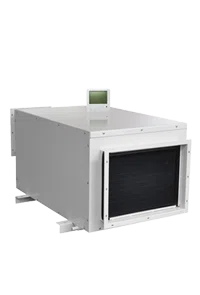
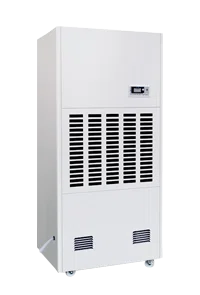
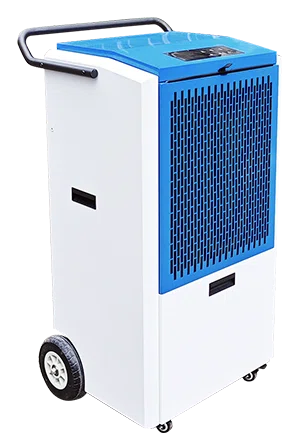
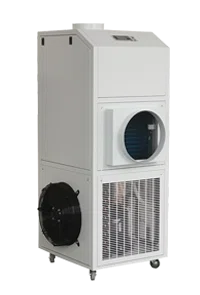
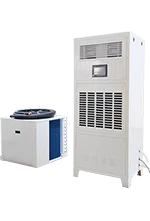
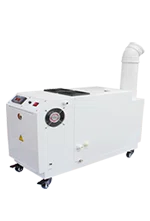
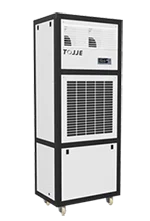
Rotary Dehumidifiers for Lithium Battery Production Environments
Lithium battery manufacturing requires extremely strict environmental control, particularly when it comes to humidity. Even minimal moisture can compromise product quality, safety, and performance. This is why rotary dehumidifiers (desiccant dehumidifiers) are widely used in battery production facilities to maintain ultra-low humidity levels.
Why Humidity Control Is Critical in Lithium Battery Production
Moisture Sensitivity of Battery Materials
Lithium battery components—especially electrolytes and electrodes—are highly sensitive to moisture. Excess humidity can lead to:
- Chemical reactions that degrade battery performance
- Reduced lifespan and efficiency
- Increased risk of defects and safety hazards
Dry Room Requirements
Battery production typically takes place in dry rooms where humidity levels must be tightly controlled:
- Dew points often below -40°C
- Stable and consistent environmental conditions
- Minimal moisture infiltration
Achieving and maintaining these conditions requires advanced dehumidification systems.
Key Advantages in Battery Manufacturing
1. Ultra-Low Humidity Control
Rotary dehumidifiers can achieve extremely low dew points, making them ideal for:
- Electrode coating processes
- Cell assembly and electrolyte filling
- Storage of sensitive materials
2. Stable and Continuous Operation
Unlike conventional systems, rotary dehumidifiers provide:
- Consistent performance over long periods
- Reliable operation in demanding environments
- Minimal fluctuations in humidity levels
3. Energy Efficiency in Low-Humidity Conditions
In ultra-dry environments, desiccant systems are more efficient than refrigerant-based dehumidifiers. They:
- Perform effectively at low temperatures
- Maintain efficiency even at low humidity levels
- Reduce overall energy consumption in dry rooms
4. Scalability and Flexibility
Rotary dehumidifiers can be customized for:
- Small pilot production lines
- Large-scale battery manufacturing plants
- Modular dry room systems
Applications in Lithium Battery Production
Electrode Manufacturing
- Controlling humidity during slurry mixing and coating
- Preventing moisture contamination in active materials
Cell Assembly
- Maintaining dry conditions during stacking and winding
- Protecting sensitive components from degradation
Electrolyte Filling
Ensuring moisture-free environments to avoid chemical reactions
Storage and Packaging
Preserving battery quality before distribution
System Design Considerations
Airflow and Distribution
Proper airflow design ensures uniform humidity control across the production area.
Insulation and Sealing
Dry rooms must be well-sealed to prevent moisture ingress from external environments.
Integration with HVAC Systems
Rotary dehumidifiers are often integrated with HVAC systems for comprehensive climate control.
Monitoring and Automation
Advanced control systems enable:
- Real-time humidity monitoring
- Automated adjustments
- Data logging for quality control
Best Practices for Operation and Maintenance
- Regularly inspect and maintain the desiccant rotor
- Monitor regeneration temperatures for optimal performance
- Replace filters to ensure clean airflow
- Calibrate sensors for accurate humidity readings
Proper maintenance ensures long-term reliability and efficiency.
Sustainability and Energy Optimization
Modern rotary dehumidifiers incorporate energy-saving technologies such as:
- Heat recovery systems
- High-efficiency desiccant materials
- Smart control algorithms
These features help reduce operational costs while maintaining strict environmental standards.
Rotary dehumidifiers are indispensable in lithium battery production environments, where precise humidity control is critical to product quality and safety. Their ability to deliver ultra-low humidity, stable performance, and energy efficiency makes them the preferred solution for dry room applications.