
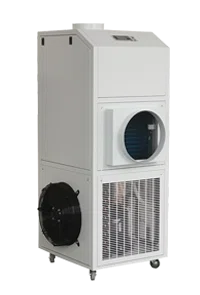
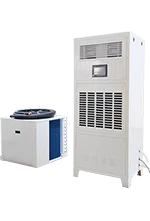
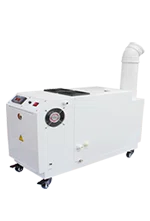
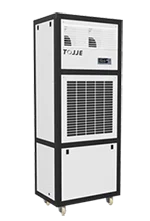
Rotary Desiccant Dehumidifier for Electrode Coating and Drying Lines
Moisture control is an important part of lithium battery manufacturing, particularly during electrode coating and drying. Excessive humidity can affect material handling, drying conditions, and the consistency of the manufacturing environment. As battery production becomes more automated and quality requirements become stricter, manufacturers need reliable systems for maintaining stable low-humidity conditions.
A rotary desiccant dehumidifier can provide continuous dry-air treatment for electrode coating and drying lines. By removing moisture from process air, the system can help manufacturers maintain controlled dew points and create a more stable production environment.
Supporting Electrode Coating Lines
Electrode coating requires controlled process conditions to achieve consistent material application and drying.
A rotary desiccant dehumidifier can supply dry air to the coating environment, helping maintain a controlled humidity level around the coating equipment.
Depending on the production configuration, the dehumidification system may be integrated with:
-
Electrode coating machines
-
Drying ovens
-
Dry rooms
-
Air handling units
-
Material storage areas
-
Slitting and winding areas
-
Battery production HVAC systems
Maintaining stable environmental conditions can help production teams reduce variations associated with uncontrolled humidity.
Low Dew Point Air for Battery Production
Relative humidity alone does not always provide enough information for low-moisture manufacturing environments. Dew point is often used to describe the actual moisture content of air.
A lower dew point indicates that the air contains less water vapor.
Rotary desiccant dehumidifiers are well suited to applications where the production process requires air with a controlled low dew point. The specific target depends on the battery chemistry, process design, facility requirements, and manufacturer's specifications.
By continuously treating process air, the system can help maintain the required dry-air conditions throughout production.
Dehumidification During Electrode Drying
After coating, the electrode passes through a drying process designed to remove solvents and establish the desired coating characteristics.
The drying line requires controlled airflow, temperature, and humidity. A stable dry-air environment can support more consistent process conditions around the drying equipment.
A rotary desiccant system can be configured to provide conditioned air for different sections of a production line.
The overall system may combine:
Air Intake → Filtration → Dehumidification → Heating/Conditioning → Electrode Drying Process → Air Return
The exact configuration depends on the equipment and process requirements.
Reducing Moisture-Related Production Risks
Uncontrolled moisture can introduce challenges in sensitive battery manufacturing environments.
A dedicated dehumidification system can help reduce moisture-related risks by maintaining more consistent environmental conditions.
Potential benefits include:
-
Stable low-humidity conditions
-
Controlled dew point
-
Continuous moisture removal
-
Improved process consistency
-
Better environmental control
-
Reduced dependence on ambient weather conditions
These benefits become particularly relevant in regions with high outdoor humidity or significant seasonal changes.
Energy Efficiency Considerations
Battery manufacturing facilities can operate continuously, making energy consumption an important consideration.
A rotary desiccant dehumidifier can be designed with heat recovery, variable airflow, optimized regeneration, and other energy-management technologies.
The actual energy performance depends on factors such as:
-
Required dew point
-
Airflow volume
-
Ambient conditions
-
Regeneration temperature
-
Desiccant wheel design
-
Air leakage
-
System pressure drop
-
Operating schedule
Proper system sizing and airflow management are therefore essential when designing a low-dew-point environment.
Integration With Automated Production Lines
Modern electrode manufacturing lines increasingly rely on automated process control.
The dehumidification system can be connected to facility monitoring and control systems to provide information such as:
-
Supply-air humidity
-
Return-air humidity
-
Dew point
-
Temperature
-
Airflow
-
Filter status
-
System operating status
With appropriate sensors and control logic, the system can automatically adjust operating parameters according to production requirements.
This allows environmental control to become part of the wider automated manufacturing process.
Electrode coating and drying lines require stable process conditions to support consistent lithium battery manufacturing. Moisture control is an important part of this environment, particularly when production requires low dew points.
A rotary desiccant dehumidifier provides continuous moisture removal and can supply controlled dry air to electrode coating, drying, and other battery manufacturing areas.
By combining appropriate dehumidification capacity, low-dew-point control, energy-management features, accurate sensors, and automated system integration, manufacturers can create a more stable production environment.