
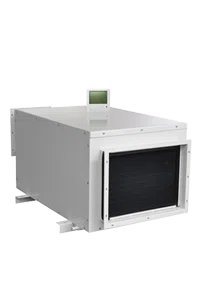
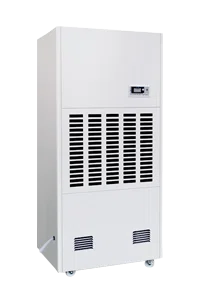
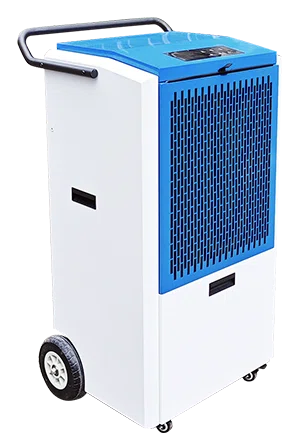
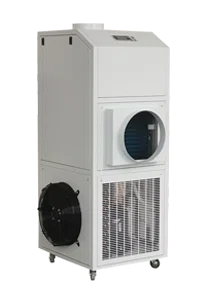
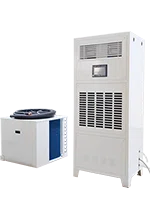
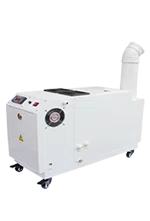
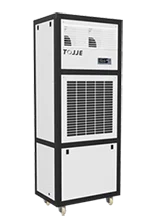
Rotary Desiccant Dehumidifiers for Pharmaceutical and Food Processing Industries
Humidity control plays a critical role in pharmaceutical manufacturing and food processing. Excessive moisture in the air can affect product quality, reduce shelf life, cause material degradation, and create challenges during production and storage. For industries with strict environmental requirements, maintaining stable humidity levels is essential.
A rotary desiccant dehumidifier provides an effective solution for controlling moisture in industrial environments. By using a rotating desiccant wheel to absorb water vapor from the air, this technology helps achieve low humidity levels even under challenging operating conditions.
Applications in the Pharmaceutical Industry
Pharmaceutical facilities often require precise environmental control to protect sensitive raw materials and finished products.
Rotary desiccant dehumidifiers can support several important pharmaceutical manufacturing processes.
Raw Material Storage
Many pharmaceutical ingredients are hygroscopic, meaning they readily absorb moisture from the surrounding air.
Maintaining controlled humidity in raw material warehouses helps reduce unwanted moisture absorption and supports material stability.
Powder Processing and Tablet Manufacturing
Powders and granules may become sticky or develop poor flow characteristics when exposed to excessive moisture.
A rotary desiccant dehumidifier can help maintain suitable environmental conditions in:
-
Powder dispensing rooms.
-
Mixing and blending areas.
-
Granulation rooms.
-
Tablet compression areas.
-
Capsule filling rooms.
Stable humidity conditions can support smoother production processes and more consistent material handling.
Pharmaceutical Packaging
Packaging areas require appropriate environmental conditions to protect moisture-sensitive products before they are sealed.
Dehumidification can help reduce moisture exposure during blister packaging, bottle filling, and other packaging operations.
Cleanroom Environments
Pharmaceutical cleanrooms require carefully controlled environmental conditions.
Rotary desiccant dehumidifiers can be integrated into HVAC and dedicated air-handling systems to provide the required humidity control.
It is important to note that dehumidification is only one part of cleanroom environmental management. Temperature, filtration, air pressure, airflow, and contamination control must also be considered.
Applications in the Food Processing Industry
Food manufacturers frequently deal with products that absorb moisture easily or require specific humidity conditions during production.
Rotary desiccant dehumidifiers offer a practical solution for managing moisture across different processing stages.
Milk Powder Production
Milk powder is highly sensitive to moisture. Excessive humidity can contribute to caking, poor flowability, and reduced product quality.
Dehumidification helps maintain suitable conditions in powder handling, processing, and packaging areas.
Instant Food and Beverage Production
Instant coffee, powdered drinks, soup mixes, and other powdered products need appropriate moisture control during manufacturing and packaging.
A desiccant dehumidification system helps reduce environmental moisture and supports more consistent processing conditions.
Confectionery Manufacturing
Sugar-based products, candies, and other confectionery items can be affected by high humidity.
Moisture control helps reduce stickiness, clumping, and unwanted texture changes during production and packaging.
Spice and Seasoning Processing
Many spices and powdered seasonings are hygroscopic.
Maintaining controlled humidity can help reduce moisture absorption, improve material handling, and support consistent packaging operations.
Food Storage and Packaging
Dehumidification systems can also be used in warehouses and packaging rooms where environmental moisture needs to be controlled.
The appropriate humidity level depends on the specific food product, packaging materials, and storage requirements.
Key Advantages of Rotary Desiccant Dehumidifiers
Why do pharmaceutical and food manufacturers choose rotary desiccant dehumidification technology?
Here are several important advantages.
1. Achieving Low Dew Point Conditions
One of the major advantages of desiccant dehumidification is its ability to achieve low humidity and low dew point conditions.
This is particularly valuable for processes involving highly hygroscopic materials or products that require extremely dry environments.
2. Reliable Performance in Different Temperature Conditions
Desiccant dehumidifiers can operate effectively across a range of ambient temperatures.
Their moisture removal mechanism does not depend on cooling the process air below its dew point, making them suitable for certain low-temperature and specialized industrial applications.
3. Continuous Dehumidification
The rotating desiccant wheel continuously moves between the adsorption and regeneration sections.
This allows the system to provide ongoing moisture removal when properly designed and operated.
4. Flexible System Integration
Rotary desiccant dehumidifiers can be integrated with existing HVAC equipment, air-handling units, and industrial ventilation systems.
Depending on project requirements, manufacturers can customize airflow, regeneration heating, filtration, and control configurations.
5. Improved Production Environment
By maintaining suitable humidity conditions, desiccant dehumidification can help reduce moisture-related production problems and support more consistent manufacturing operations.
Improving Energy Efficiency in Industrial Dehumidification
Energy consumption is an important consideration when operating industrial dehumidification systems.
Although rotary desiccant dehumidifiers offer excellent moisture removal capabilities, their overall energy efficiency depends on system design and operating conditions.
Manufacturers can consider several strategies to improve performance:
-
Select equipment according to actual moisture loads.
-
Avoid excessive airflow and unnecessary over-dehumidification.
-
Use heat recovery where technically suitable.
-
Optimize regeneration temperature.
-
Maintain filters and air ducts regularly.
-
Monitor system performance through automatic controls.
-
Consider combining desiccant dehumidification with cooling systems when appropriate.
A properly designed system can help balance humidity control requirements and long-term operating costs.
Why Professional System Design Matters
Pharmaceutical and food processing facilities have different production layouts, environmental conditions, and moisture control requirements.
A standard dehumidifier configuration may not be suitable for every application.
Professional system design should consider:
-
Production room dimensions.
-
Required temperature and humidity.
-
Outdoor air conditions.
-
Internal moisture generation.
-
Airflow distribution.
-
Filtration requirements.
-
Regeneration heat availability.
-
Integration with existing HVAC systems.
For pharmaceutical and food-related applications, equipment materials, cleanability, hygienic design, and applicable regulatory requirements should also be evaluated.
Working with an experienced industrial dehumidification manufacturer can help businesses select a solution that matches their specific production requirements.
Humidity control is an essential part of maintaining product quality and production stability in pharmaceutical and food processing industries.
From protecting hygroscopic pharmaceutical ingredients to preventing moisture-related problems in powdered food production, rotary desiccant dehumidifiers provide an effective approach to industrial moisture management.
With their ability to achieve low dew points, support continuous dehumidification, and integrate with different air-handling systems, they are a valuable solution for facilities with demanding humidity control requirements.