
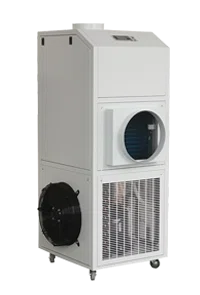
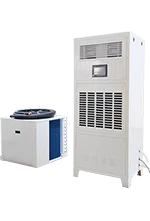
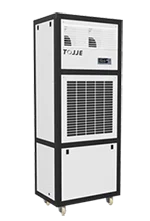
Running a Ducted Dehumidifier in a Cold Space: Low-Ambient Controls and Freeze Protection
Controlling humidity in a cold environment presents challenges that standard dehumidification systems may not be designed to handle. Warehouses, distribution centers, basements, industrial storage rooms, agricultural facilities, and unheated commercial buildings can experience excessive moisture even when temperatures are relatively low. Condensation on cold surfaces, corrosion of metal components, mold growth, and damage to stored materials can become persistent problems if humidity is not properly managed.
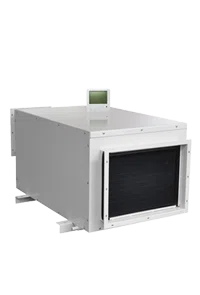
A ducted dehumidifier can help maintain stable moisture conditions while allowing air to be distributed through a duct network. However, operating a conventional refrigeration-based dehumidifier in a cold space requires careful attention to low-ambient controls, evaporator icing, airflow, condensate drainage, and freeze protection.
Understanding these factors helps facility managers and HVAC engineers select the right equipment, reduce unnecessary shutdowns, and maintain reliable humidity control during colder operating conditions.
Low-Ambient Controls: Keeping the System Within Its Operating Range
Low-ambient controls help a dehumidifier respond to conditions that could otherwise cause unstable operation or excessive coil icing.
Their design varies by manufacturer and equipment type. Common control strategies include the following.
Temperature-Based Operating Limits
A dehumidifier may use temperature sensors to determine whether the entering air or refrigeration circuit is operating within an acceptable range.
When temperatures fall outside the specified limits, the controller may reduce operation, initiate a protective sequence, or stop the compressor.
These limits should be taken from the manufacturer's technical documentation. A unit designed for a heated commercial building should not automatically be assumed suitable for an unheated warehouse during winter.
Evaporator Temperature Monitoring
Monitoring evaporator temperature can help identify conditions associated with frost formation.
Depending on the design, the controller may stop or interrupt the compressor, maintain appropriate fan operation, or initiate a defrost sequence.
Sensor placement and control logic matter. A sensor that does not adequately represent the coil's coldest region may fail to detect local icing early enough.
Humidity and Temperature Coordination
A humidity controller operating alone may continue requesting dehumidification even when air temperatures are too low for safe or efficient refrigeration-based operation.
Coordinating temperature limits with humidity demand helps avoid this problem.
For example, a controller can maintain a humidity target while respecting the equipment's minimum operating temperature. If the conditions fall outside the permitted range, it can signal an alarm or suspend dehumidification until the environment returns to an acceptable state.
Compressor Protection
Compressors must operate within their specified pressure, temperature, and electrical limits. Low-ambient operating conditions can change refrigerant pressures and affect lubrication and system stability.
Depending on the equipment, protective functions may include pressure monitoring, compressor temperature protection, minimum run times, and restart delays.
These controls should be part of the approved equipment design. Field modifications to refrigerant controls or compressor protection settings can introduce serious reliability and safety risks.
Freeze Protection for Evaporator Coils and Refrigeration Components
<AsyncImage query="HVAC evaporator coil frost formation refrigeration dehumidifier maintenance inspection" aspectRatio="16:9" width="100%"/>
Freeze protection is one of the most important considerations when a refrigeration-based ducted dehumidifier operates in a cold space.
When moisture freezes on the evaporator, the frost layer restricts airflow and reduces heat transfer. As frost accumulates, moisture removal can decline and the system may enter repeated protective shutdowns.
Automatic Defrost Systems
Some dehumidifiers include automatic defrost controls that detect frost-related conditions and temporarily interrupt normal dehumidification.
The defrost sequence depends on the equipment design. It may involve compressor shutdown, fan operation, or another manufacturer-defined process that allows the coil to warm sufficiently for frost to melt.
A defrost system should be evaluated for the actual ambient temperature and expected moisture load. A standard defrost cycle may not be adequate for operation below the unit's rated temperature range.
Drainage During Defrost
Melting frost creates liquid water that must be removed safely.
Drain pans, drain outlets, traps, and exposed drain lines should be evaluated for freezing risk. A blocked drain can cause water accumulation, leakage, corrosion, and potential damage to nearby equipment.
Practical measures may include:
-
Routing drain lines through protected areas.
-
Insulating appropriate sections of the drainage system.
-
Maintaining the specified drain slope.
-
Using approved heat tracing where necessary.
-
Protecting traps and outlets against freezing.
-
Providing suitable access for inspection and cleaning.
Heat tracing must be selected and installed according to the applicable electrical and environmental requirements. Insulation alone does not prevent freezing indefinitely if water remains stagnant in a pipe exposed to sufficiently low temperatures.
Avoiding Improvised Defrost Solutions
Manually overriding freeze protection or forcing a compressor to run continuously can worsen icing and damage equipment.
Similarly, adding external heaters without understanding the refrigeration system may create uneven temperatures or introduce electrical hazards.
If a dehumidifier repeatedly freezes, the correct response is to investigate operating temperature, airflow, refrigerant-system condition, sensor performance, and drainage rather than repeatedly resetting the equipment.
Duct Design and Airflow Management in Cold Environments
A dehumidifier may have appropriate low-temperature controls and still perform poorly if the duct system is improperly designed.
Airflow determines how effectively moisture-laden air reaches the treatment section and how efficiently the system transfers heat and moisture.
Maintain the Required Airflow
Restricted airflow can affect coil temperature, reduce moisture-removal performance, and contribute to icing under certain operating conditions.
Facility managers should inspect filters, grilles, dampers, duct transitions, and return-air openings for obstructions.
The installed airflow should meet the manufacturer's specifications. Simply increasing fan speed is not always an appropriate solution because it can increase static pressure, noise, and energy consumption.
Insulate Ductwork in Unheated Areas
Ducts passing through cold spaces can lose heat, and their external surfaces may fall below the surrounding air's dew point.
This can result in condensation on duct surfaces, especially where humid air contacts cold metal. If temperatures fall below freezing, accumulated moisture may also freeze.
Appropriate insulation and vapor control help reduce these risks. The insulation system should be selected according to duct temperature, ambient conditions, and the direction of moisture vapor movement.
Prevent Uncontrolled Air Leakage
Leaky ducts can draw in unwanted humid air or discharge treated air into unconditioned areas. In a cold building, this can create localized condensation, increase the moisture load, and reduce system efficiency.
Sealing joints and verifying duct connections can improve humidity control and make performance easier to predict.
Balance Supply and Return Air
The supply and return layout should ensure that moisture-laden air reaches the dehumidifier rather than allowing short-circuit airflow between nearby grilles.
For multiroom applications, balancing dampers and appropriate return-air paths can help distribute dehumidification more evenly.
When Should You Use a Desiccant Dehumidifier Instead?
A refrigeration-based dehumidifier is not always the most practical solution for a cold space.
Desiccant dehumidification should be considered when temperatures remain low for extended periods, when a very low humidity level is required, or when the moisture-removal process must continue under conditions that substantially limit conventional refrigeration equipment.
Potential applications include:
-
Unheated industrial storage facilities.
-
Cold warehouses requiring condensation prevention.
-
Pharmaceutical or specialty-material storage.
-
Battery manufacturing and dry processing areas.
-
Industrial facilities with stringent moisture specifications.
-
Processes where frost formation creates unacceptable downtime.
The correct choice requires a comparison of moisture-removal capacity, operating temperature, energy demand, regeneration requirements, maintenance needs, and total cost of ownership.
In some facilities, a hybrid arrangement may be appropriate, combining temperature management with a dehumidification system selected for the actual moisture load.
It is also important to distinguish between maintaining a low relative humidity and removing a specified amount of water per day. Equipment rated for a particular capacity under warm, humid conditions may deliver substantially less moisture removal in a cold environment.
Running a ducted dehumidifier in a cold space requires more than installing a standard unit and setting a humidity target. Low temperatures can reduce moisture-removal capacity, increase the risk of evaporator icing, complicate condensate drainage, and place additional demands on the control system.
Low-ambient controls, correctly designed defrost functions, protected drainage, suitable duct insulation, and adequate airflow all contribute to reliable operation. Where temperatures fall below the effective operating range of refrigeration-based equipment, a desiccant dehumidifier or another purpose-designed solution may be more appropriate.