
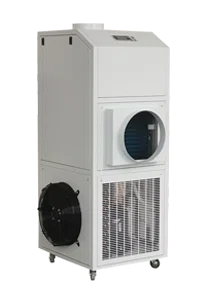
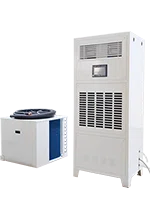
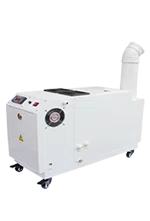
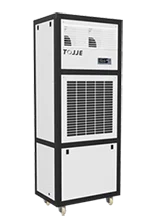
Warehouse Dehumidifiers in Solvent and Flammable Stores
Solvent and flammable material storage warehouses require strict environmental control to maintain product quality, protect stored materials, and ensure workplace safety. One important factor that is sometimes overlooked is humidity.
Excessive moisture can contribute to corrosion of metal containers, deterioration of packaging, condensation on storage equipment, and damage to warehouse infrastructure. In facilities storing solvents, paints, coatings, chemicals, and other flammable substances, moisture management must be carefully planned alongside fire prevention and hazardous-area safety requirements.
Industrial warehouse dehumidifiers can help maintain stable humidity levels and protect storage environments. However, selecting the right equipment for solvent and flammable stores requires special attention to electrical safety, hazardous-area classification, and ventilation requirements.
Why Is Humidity Control Important in Solvent and Flammable Stores?
Solvent storage facilities often contain metal drums, chemical containers, industrial packaging, and sensitive storage equipment. High humidity can create several operational challenges.
Preventing Container Corrosion
Many solvent storage containers are made from steel or other metals. Prolonged exposure to high humidity and condensation can accelerate corrosion, potentially weakening containers and affecting their long-term integrity.
Protecting Packaging Materials
Moisture can damage cardboard packaging, labels, wooden pallets, and other storage materials. Maintaining appropriate humidity helps preserve packaging quality and product identification.
Reducing Condensation
Temperature fluctuations can cause condensation on walls, ceilings, pipes, and storage surfaces. Proper humidity management helps reduce moisture-related problems when combined with suitable temperature control and building insulation.
Protecting Warehouse Infrastructure
Excessive moisture can contribute to corrosion of structural components, storage racks, electrical enclosures, and mechanical equipment.
Why Standard Warehouse Dehumidifiers May Not Be Suitable
A solvent or flammable storage warehouse is different from an ordinary commercial storage facility.
Many solvents release flammable vapours that can form an explosive atmosphere when mixed with air at certain concentrations. Electrical equipment, motors, switches, relays, and other components may become potential ignition sources if they are not suitable for the classified environment.
For this reason, conventional industrial dehumidifiers should never automatically be assumed safe for installation inside a flammable-material storage area.
Before selecting equipment, facility managers should consider:
-
The types of solvents and chemicals being stored.
-
The possibility of flammable vapour release.
-
The hazardous-area classification of the installation location.
-
The required equipment protection level.
-
Applicable ATEX, IECEx, or local hazardous-area requirements.
-
The ventilation and fire protection systems already installed.
Equipment selection should be based on a documented hazardous-area assessment rather than simply choosing a dehumidifier with a suitable moisture removal capacity.
Choosing the Right Dehumidification Solution
Different warehouse environments require different moisture-control strategies.
Industrial Refrigerant Dehumidifiers
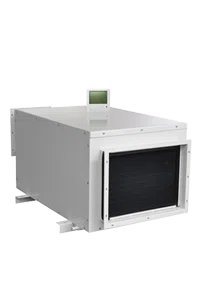
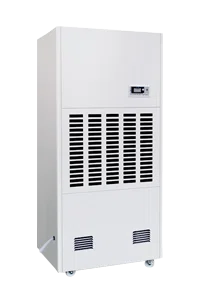
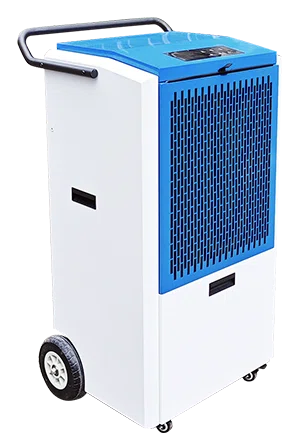
Refrigerant dehumidifiers remove moisture by cooling incoming air below its dew point, allowing water vapour to condense and drain away.
They are commonly used in general industrial warehouses where temperature and humidity conditions are suitable.
However, standard refrigerant dehumidifiers contain electrical and mechanical components that may not be suitable for hazardous locations.
Industrial Desiccant Dehumidifiers
Desiccant dehumidifiers use moisture-absorbing materials to remove water vapour from the air.
They can provide effective humidity control, particularly in low-temperature environments or applications requiring lower relative humidity.
For solvent and flammable stores, the complete system must still be evaluated for hazardous-area suitability. A desiccant rotor alone does not make a dehumidifier explosion-proof.
Ex-Proof Dehumidification Systems
Where dehumidification equipment must operate within a classified hazardous area, a specially engineered system may be required.
Depending on the area classification and design, this may involve appropriately certified electrical components, motors, instrumentation, control systems, and protective enclosures.
The entire installation must meet the applicable requirements. Simply installing an explosion-protected motor on a standard dehumidifier is not sufficient.
In some applications, an alternative approach is to locate the dehumidifier outside the classified area and deliver conditioned air through an appropriately designed duct system. This arrangement must also be assessed to ensure that flammable vapours cannot enter equipment or ductwork in an unsafe manner.
Key Factors When Selecting a Warehouse Dehumidifier
Selecting a suitable system involves more than calculating the required litres of moisture removal per day.
1. Warehouse Size and Air Volume
The floor area, ceiling height, total air volume, and warehouse layout all influence the dehumidification requirements.
2. Target Relative Humidity
The appropriate humidity level depends on the stored chemicals, container materials, packaging, and operational requirements. There is no single humidity target suitable for every solvent warehouse.
3. Ambient Temperature
Temperature affects the performance of different dehumidification technologies. Desiccant systems may be preferable in certain low-temperature applications.
4. Hazardous-Area Classification
This is one of the most important considerations. Equipment must be selected according to the actual hazardous-area classification and applicable certification requirements.
5. Ventilation and Airflow
Dehumidification is not a replacement for ventilation. Solvent vapour control, exhaust ventilation, and gas detection must be designed independently according to the chemical hazards and applicable regulations.
6. Drainage and Maintenance
Condensate drainage, filter replacement, rotor maintenance, and equipment inspection should be considered during system design.
Benefits of a Properly Designed Industrial Dehumidification System
A correctly designed humidity-control system can provide several operational benefits:
Improved Storage Conditions: Helps maintain more stable environmental conditions for stored products and packaging.
Reduced Corrosion Risk: Helps reduce moisture-related corrosion on metal containers, racks, and warehouse equipment.
Better Inventory Protection: Reduces the risk of damage associated with excessive moisture and condensation.
Improved Facility Management: Provides more consistent environmental monitoring and better control over warehouse conditions.
Long-Term Operational Reliability: Helps protect warehouse infrastructure and supports preventive maintenance programmes.
These benefits depend on correct system sizing, installation, operation, and maintenance.
Warehouse dehumidifiers can play an important role in protecting solvent and flammable storage facilities from excessive moisture, condensation, and corrosion.
However, safety must always come first. Conventional warehouse dehumidifiers should not be installed in potentially explosive atmospheres unless they are specifically suitable for the classified location.
By combining professional humidity assessment, appropriate hazardous-area equipment, effective ventilation, and regular maintenance, businesses can establish a more reliable and controlled storage environment.