
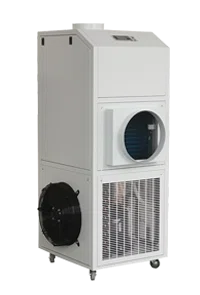
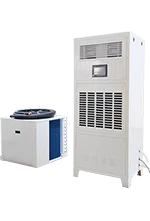
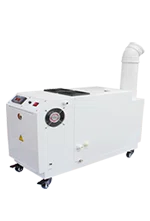
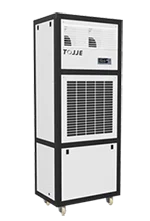
Wet Film Humidifiers for Paper and Printing Industries
Paper and printing processes are highly sensitive to changes in environmental humidity. When air becomes too dry, paper can lose moisture, develop dimensional changes, and generate static electricity. These issues can affect paper feeding, printing accuracy, material handling, and overall production efficiency.
Wet film humidifiers provide an evaporative humidification solution that can help maintain a more stable production environment. By adding moisture to dry air, these systems can support humidity management in paper mills, printing facilities, warehouses, and other paper-processing environments.
Wet Film Humidifiers in Paper Manufacturing
Maintaining Stable Production Conditions
Paper production involves multiple stages, including forming, drying, finishing, cutting, and storage. Environmental humidity can influence material behavior throughout these processes.
Wet film humidifiers can help maintain more consistent air conditions around sensitive production areas.
Supporting Paper Dimensional Stability
Changes in moisture content can affect paper dimensions. Stable humidity conditions can help reduce unwanted dimensional fluctuations and contribute to more predictable paper handling.
Reducing Excessively Dry Conditions
During dry seasons or in climate-controlled facilities, indoor air can become excessively dry. A humidification system can help compensate for moisture loss and maintain the desired environmental conditions.
Wet Film Humidifiers for Printing Facilities
Printing requires accurate movement and positioning of paper or other substrates throughout the production line.
Humidity control can support several aspects of printing operations.
Improved Paper Feeding
Dry paper can become more prone to static buildup and handling problems. Maintaining suitable humidity can help create more stable paper-feeding conditions.
Supporting Print Registration
Paper dimensional changes can affect alignment between colors and printing elements. Stable environmental conditions can help reduce some humidity-related dimensional variations.
Consistent Printing Quality
Humidity can influence paper properties such as flexibility, static behavior, and dimensional stability. Better environmental control can contribute to more consistent printing conditions.
Controlling Static Electricity with Humidity
Static electricity is a common concern in dry paper-handling environments.
Low humidity can increase the tendency of materials to accumulate static charges. This can cause paper sheets to:
-
Stick together
-
Separate unpredictably
-
Feed incorrectly
-
Attract dust
-
Create handling difficulties
By increasing relative humidity to an appropriate level, wet film humidifiers can help reduce the conditions that encourage excessive static buildup.
Humidity control should work alongside appropriate grounding and other static-control measures rather than being treated as the only solution.
Benefits of Wet Film Humidifiers for Paper and Printing
Stable Humidity
Continuous humidification can help maintain more consistent environmental conditions.
Efficient Evaporation
The wet film provides a large surface area for water evaporation, supporting efficient moisture transfer into the air.
Suitable for Large Air Volumes
Wet film humidification can be integrated into air-handling systems serving production areas and other large spaces.
Reduced Static-Related Problems
Maintaining suitable humidity can help reduce excessive static electricity associated with very dry environments.
Support for Product Quality
Stable humidity can help reduce certain moisture-related paper handling and printing problems.
Applications Across the Paper and Printing Industries
Wet film humidifiers can be considered for various environments, including:
Paper Mills
Humidity control can support production and finishing areas where paper moisture balance is important.
Printing Plants
Printing presses and paper-handling areas can benefit from stable environmental humidity.
Packaging Production
Paperboard and packaging materials can be sensitive to environmental moisture changes during converting and processing.
Paper Storage Areas
Controlled humidity can help maintain suitable storage conditions for paper products.
Commercial Printing Facilities
Digital printing, offset printing, and other printing operations can use environmental humidity control to improve production consistency.
How to Improve Humidity Control in Printing and Paper Facilities
Monitor Relative Humidity
Install appropriate humidity sensors in representative production areas.
Establish Suitable Setpoints
Humidity targets should be determined according to the paper type, printing process, facility conditions, and equipment requirements.
Avoid Rapid Humidity Changes
Gradual and controlled humidity adjustment can help reduce sudden changes in paper moisture content.
Maintain the Humidifier Regularly
Cleaning and inspection can help maintain consistent humidification performance.
Combine Humidification with HVAC Control
Integrating the wet film humidifier with the facility's air-handling and climate-control system can improve overall environmental management.
Wet film humidifiers for paper and printing industries provide an effective way to manage moisture levels in production and storage environments. By adding moisture through controlled evaporation, these systems can help maintain stable relative humidity and address challenges associated with excessively dry air.
When combined with appropriate HVAC design, humidity monitoring, water management, and regular maintenance, wet film humidification can become an important part of modern paper and printing environmental control systems.