
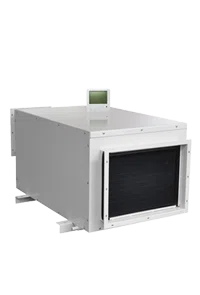
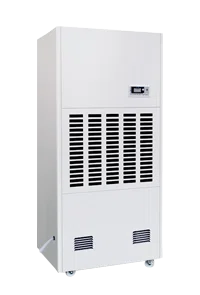
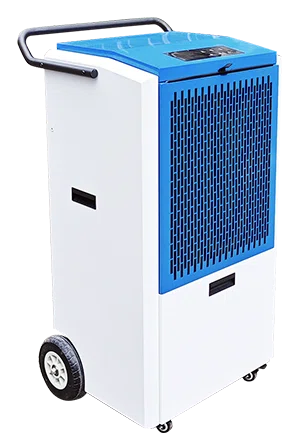
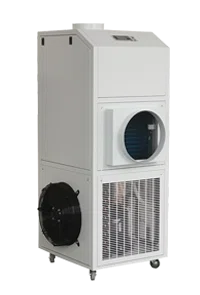
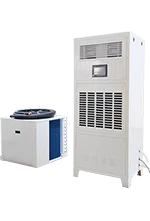
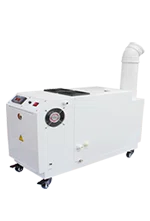
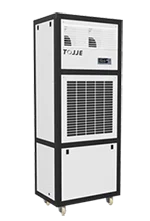
Industrial Dehumidifiers for Chemical and Material Storage
Chemical products and industrial materials often require carefully controlled storage environments. Excessive humidity can contribute to condensation, corrosion, caking, degradation, packaging damage, and other moisture-related problems.
Industrial dehumidifiers provide a practical solution by continuously removing excess moisture from the air and maintaining more stable humidity conditions. For chemical warehouses, raw material storage areas, and industrial distribution centers, effective humidity control can help protect stored products and maintain storage quality.
How Industrial Dehumidifiers Protect Stored Materials
Reducing Excess Moisture
Industrial dehumidifiers remove water vapor from the air, helping prevent humidity from reaching levels that may negatively affect stored products.
For large warehouses, industrial-grade systems can provide continuous moisture removal to support stable environmental conditions.
Minimizing Condensation
Condensation can occur when humid air reaches surfaces below its dew point. Dehumidification reduces the amount of moisture available in the air, helping lower condensation risks in storage areas.
Supporting Corrosion Prevention
Metal drums, tanks, machinery, tools, and other components may be vulnerable to moisture-related corrosion.
By controlling ambient humidity, industrial dehumidifiers can complement protective coatings, packaging, ventilation, and other corrosion-control measures.
Protecting Moisture-Sensitive Materials
Certain powders, chemicals, raw materials, and industrial products can be sensitive to moisture. Excess humidity may affect their physical properties, handling characteristics, or storage stability.
A controlled storage environment can help maintain consistent material conditions.
Applications of Industrial Dehumidifiers in Chemical Storage
Industrial dehumidification systems can be used in various chemical storage environments, including:
-
Chemical warehouses
-
Raw material storage rooms
-
Chemical distribution centers
-
Packaging and staging areas
-
Temperature-controlled storage facilities
-
Industrial laboratories
-
Specialty chemical storage areas
The appropriate humidity target depends on the specific chemical, packaging, storage conditions, and applicable safety requirements.
Industrial Dehumidifiers for Material Storage
Metal Materials
Steel, iron, and other metal products can be susceptible to corrosion when exposed to high humidity.
Dehumidification can help create a drier environment for:
-
Steel components
-
Metal parts
-
Machinery components
-
Tools
-
Metal coils and sheets
Powders and Granular Materials
Some powders and granular products can absorb moisture from humid air. Excess moisture may cause clumping or changes in handling characteristics.
Humidity control can help maintain more stable storage conditions.
Packaging Materials
Paper-based packaging, cartons, labels, and certain moisture-sensitive packaging materials can also be affected by excessive humidity.
Maintaining controlled humidity can help reduce moisture-related deformation and deterioration.
Benefits of Industrial Dehumidification for Chemical Warehouses
An appropriately designed dehumidification system can provide several operational benefits:
-
More stable storage conditions
-
Reduced condensation risk
-
Better protection against moisture-related corrosion
-
Improved material preservation
-
Lower risk of humidity-related packaging problems
-
More consistent warehouse environmental conditions
-
Potentially lower product losses caused by moisture exposure
Dehumidification should be integrated with appropriate ventilation, temperature control, packaging, and chemical-storage safety practices.
Installation and Maintenance Considerations
For reliable long-term operation, industrial dehumidifiers should be properly installed and maintained.
Key considerations include:
-
Correct equipment sizing – Match moisture-removal capacity to the actual facility load.
-
Strategic placement – Position equipment to promote effective air circulation.
-
Air filtration – Keep filters clean to maintain airflow.
-
Drainage – Ensure collected water is safely and effectively removed where applicable.
-
Regular inspection – Check major components and operating conditions regularly.
-
Humidity monitoring – Use reliable sensors to verify that the storage environment remains within the desired range.
For chemical storage facilities, installation and maintenance should also follow relevant site-specific safety procedures.
Industrial dehumidifiers can play an important role in protecting chemicals and industrial materials during storage. By reducing excess moisture and helping maintain stable humidity conditions, they can support corrosion prevention, material preservation, condensation control, and more reliable warehouse operations.
When selecting an industrial dehumidifier for chemical and material storage, businesses should consider facility size, target humidity, temperature, moisture load, airflow, operating conditions, and the specific requirements of stored products. A properly designed dehumidification system can become an important part of an effective industrial storage environment.